Escort Job Travel Tips: Working Comfortably Away from Home

Traveling for an escort job isn’t like taking a vacation. You’re not there to relax-you’re there to work, often in unfamiliar places, with strangers, under pressure. The difference between a smooth trip and a stressful one comes down to preparation. It’s not about luxury. It’s about control. Knowing where you’ll sleep, how you’ll get there, who you’ll meet, and how to stay safe makes all the difference.
Plan Your Route Like a Pro
Don’t wing it. If you’re flying into a new city, check the airport shuttle options before you land. Many escort workers avoid taxis unless they’ve pre-booked through a trusted service. Use apps like Uber or Bolt only if you’ve verified the driver’s profile and license plate before getting in. Always share your ride details with someone you trust-even if it’s just a quick text saying, “Car picked me up, plate ABC123, heading to Hotel X.”
Know your route from the airport to your accommodation. Bookmark it on Google Maps offline. Cell service isn’t always reliable, especially in older buildings or underground parking. If you’re driving, park in well-lit, monitored lots. Avoid street parking in unfamiliar areas, even if it’s cheaper.
Choose Accommodations Wisely
Forget hostels. Avoid Airbnb listings with no reviews or hosts who won’t video chat before you arrive. Look for hotels with 24-hour reception, secure entry, and in-room safes. Chain hotels like Holiday Inn Express, Travelodge, or Premier Inn are often the safest bets because they have consistent security protocols. Book directly through the hotel website, not third-party sites-this gives you better recourse if something goes wrong.
Ask for a room on a middle floor, not ground or top. Ground floors are easier to access from outside. Top floors mean slower elevator response in an emergency. Request a room away from the stairs and service entrances. If the hotel doesn’t let you choose, ask for a room near the elevators but not directly across from them-this gives you a buffer zone.
Pack Smart, Not Heavy
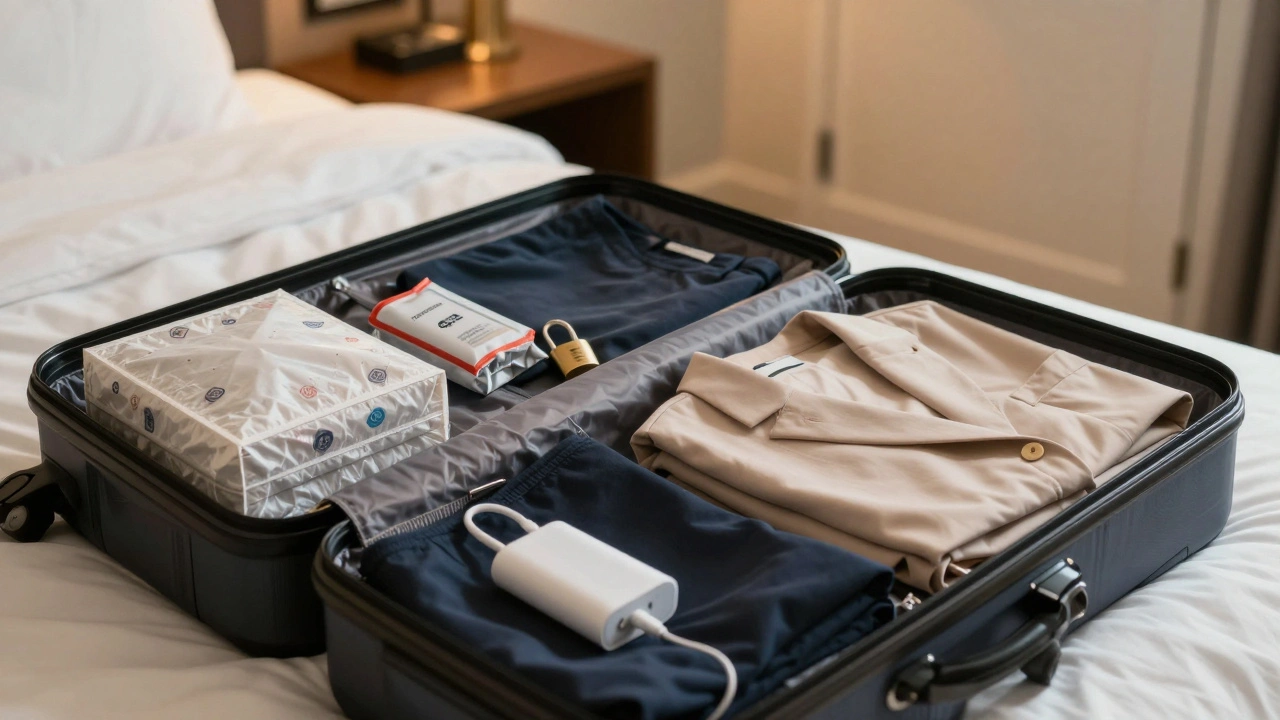
You don’t need five outfits for three days. Pack one versatile outfit for travel, one for meetings, and one for downtime. Bring a lightweight garment bag to keep clothes wrinkle-free. Use packing cubes to separate clean and dirty clothes-this saves time and keeps things organized.
Essentials beyond clothes: a portable phone charger, a small first-aid kit (bandages, painkillers, antiseptic wipes), a travel lock for your bag, and a small flashlight. Don’t forget your ID, driver’s license, and any work permits you might need. Keep copies of everything in a secure cloud folder, not just your phone.
Leave expensive jewelry at home. No one needs to know you’re carrying cash or designer accessories. Keep your wallet light-only carry what you need for the day. Use a money belt or hidden pouch under your clothes if you’re carrying more than £200.
Set Boundaries Before You Arrive
Clear communication isn’t optional-it’s survival. Before you leave, confirm the client’s name, contact number, and exact address. Cross-check that address with Google Street View. If it looks like a residential area with no visible signage, ask for clarification. If they refuse to give details, walk away. No job is worth your safety.
Set your limits in writing. Send a quick message before you arrive: “I’m arriving at 7 PM. My rate is £X/hour. No kissing, no unprotected acts, no extra guests. I leave at 11 PM sharp.” Keep it polite but firm. If they push back, cancel. You’re not being rude-you’re protecting your boundaries.
Always have an exit plan. Know where the nearest police station, hospital, or 24-hour convenience store is. Save local emergency numbers in your phone. In the UK, dial 999. If you feel unsafe at any point, leave immediately-even if it means losing the booking. Your peace of mind is worth more than any fee.
Stay Connected, But Stay Private
Use a burner phone or a secondary SIM card for work-related calls. Don’t use your personal number. Apps like Google Voice or Burner let you create temporary numbers that forward to your main phone. This keeps your real number hidden from clients, and you can delete the number after the trip.
Don’t post about your travels on social media. No selfies outside hotels. No check-ins. No stories saying “On a quick trip to Manchester!” That’s how people track you. Even if you think your profile is private, someone might screenshot it. Assume everything you post is public.
Use encrypted messaging apps like Signal for communication with clients. Avoid WhatsApp or SMS-they’re not secure. If you must use WhatsApp, turn off read receipts and don’t save client numbers in your contacts under their real name.

Trust Your Gut, Always
You’ll meet people who seem nice. They’ll compliment you. They’ll offer tea. They’ll say, “You’re so brave for doing this.” None of that matters if something feels off. That cold feeling in your stomach? That’s your body warning you. Don’t ignore it.
Signs to watch for: They arrive early. They ask too many personal questions. They bring a friend “just to say hi.” They insist on meeting at their place instead of yours. They get angry when you mention your rules. If any of these happen, leave. Don’t make excuses. Don’t say you’ll come back tomorrow. Just walk out.
Some workers carry a personal alarm or pepper spray. In the UK, pepper spray is illegal for civilians. A loud personal alarm-something that sounds like a siren-is legal and effective. Clip it to your bag or belt. If you feel threatened, press it. It draws attention fast.
Recovery Is Part of the Job
Traveling for work is exhausting. You’re on high alert for hours, sometimes days. After the job, don’t jump into another one. Give yourself time to reset. Take a long shower. Listen to music. Call a friend. Don’t scroll through dating apps or respond to messages right away.
Hydrate. Eat something real-not fast food. Even if you’re tired, try to get seven hours of sleep. Your body needs recovery as much as your mind does. Keep a small journal or voice memo app where you jot down how each trip went. Not for clients-just for you. Over time, you’ll spot patterns: which cities feel safer, which clients are reliable, which hotels you’d avoid again.
And remember: this job doesn’t define you. You’re not just an escort. You’re someone who makes choices, manages risk, and takes care of yourself. That’s strength. That’s professionalism. That’s what keeps you going.
Is it safe to stay in hotels alone as an escort?
Yes, if you choose wisely. Stick to chain hotels with 24-hour reception, secure entry, and in-room safes. Avoid unknown Airbnb listings. Always verify the address before arriving. Book directly through the hotel’s website, not third-party platforms. Request a room on a middle floor, away from service entrances and stairwells.
Should I use my personal phone for escort work?
No. Always use a separate phone or a temporary number app like Burner or Google Voice. This keeps your real number private and protects your identity. Never save client numbers under their real name in your contacts. Use encrypted messaging apps like Signal for communication.
What should I pack for an escort job trip?
Pack light: one travel outfit, one meeting outfit, one casual outfit. Bring a portable charger, a small first-aid kit, a travel lock, and a flashlight. Keep ID and permits handy. Use packing cubes to organize clothes. Leave jewelry and large amounts of cash at home. Carry only what you need for the day in a hidden money belt if necessary.
How do I know if a client is trustworthy?
Trust your instincts. Red flags include: arriving early, asking too many personal questions, bringing someone else, refusing to meet at your chosen location, or getting upset when you state your boundaries. Always confirm their name and address ahead of time. If anything feels off, leave immediately. No job is worth your safety.
Can I carry pepper spray for protection?
No. Pepper spray is illegal for civilians in the UK. Instead, carry a personal alarm-a small device that emits a loud siren when pressed. These are legal, easy to carry, and effective at drawing attention in an emergency. Clip it to your bag or belt for quick access.
How do I recover after a long trip?
Recovery isn’t optional-it’s part of the job. After each trip, take time to reset. Take a long shower, eat something healthy, and avoid screens for at least an hour. Call someone you trust. Avoid jumping into another booking right away. Keep a private journal or voice memo to note what worked and what didn’t. Sleep, hydrate, and give yourself space to breathe.
Final Thought: You’re Not Alone
There are thousands of women and men traveling for this work every week. They’re not reckless. They’re careful. They plan. They set boundaries. They know their limits. You can too. This isn’t about being fearless-it’s about being prepared. Every smart decision you make on the road adds up. One trip at a time, you build a career that’s safe, sustainable, and yours.