From Burnout to Balance: Self-Care for Escort Job Workers

Working as an escort isn’t just about showing up-it’s about showing up day after day, often alone, under pressure, and without the safety nets most jobs offer. You manage your own schedule, handle unpredictable clients, deal with stigma, and carry emotional weight no one talks about. Over time, that weight doesn’t just sit on your shoulders-it sinks in. And when it does, burnout doesn’t whisper. It screams.
What Burnout Looks Like in the Escort Industry
Burnout doesn’t mean you’re tired one morning. It means you’ve stopped caring if you show up at all. It’s when you scroll through messages and feel nothing. When you cancel appointments because the thought of smiling at another stranger feels like climbing a mountain. It’s when you cry in the shower-not because something bad happened that day, but because nothing good has happened in weeks.
A 2024 survey of independent sex workers in the UK found that 68% reported symptoms of chronic emotional exhaustion, and 52% said they’d gone weeks without taking a full day off. These aren’t outliers. They’re routine.
Burnout here isn’t about working too many hours-it’s about working without rest, without recognition, and without permission to be human. You’re expected to be warm, attentive, and always in control-even when you’re falling apart inside.
Self-Care Isn’t a Luxury-It’s Survival
People say self-care is bubble baths and candles. That’s not self-care for escorts. That’s distraction. Real self-care is the quiet, consistent choices that keep you alive when no one else is watching.
It’s saying no to a client when your body says no-even if you need the money. It’s setting a hard stop at 10 PM, even if the messages keep coming. It’s calling a friend who doesn’t ask questions, just listens. It’s keeping a journal where you write down one thing you did well each day, even if it’s just “I ate something that wasn’t takeaway.”
Self-care is not selfish. It’s the opposite. When you’re running on empty, you can’t protect yourself. You can’t make smart decisions. You can’t say no to dangerous situations. You become more vulnerable-not because you’re weak, but because you’re drained.
Three Non-Negotiable Self-Care Practices
Here are three things that actually work-for real, day-in-day-out. Not trends. Not Instagram posts. Things that have kept escorts grounded for years.
- Body Check-Ins - Every morning, before you get dressed, sit for two minutes. Ask yourself: Where is my body holding tension? Is my jaw clenched? Are my shoulders up to my ears? Do I feel numb? Don’t fix it yet. Just notice. This builds awareness. Awareness is the first step to reclaiming control.
- Boundary Blocks - Block out two full days every month as non-negotiable recovery time. No bookings. No messages. No guilt. Use them to sleep, walk, read fiction, or just sit in silence. If someone asks why you’re unavailable, say: “I’m taking time off.” That’s all you owe them.
- Emotional First Aid Kit - Keep a small digital folder on your phone with: a list of 3 trusted people to call, a playlist of songs that make you feel strong, a PDF of your legal rights as a sex worker in the UK, and one short affirmation you wrote yourself (e.g., “My worth isn’t tied to what they pay me.”). Open it when you feel shaky.

The Hidden Cost of Isolation
One of the biggest killers of mental health in this work is loneliness-not being alone, but feeling unseen. You might have dozens of clients, but no one who knows your real name, your fears, or your dreams. You’re a service, not a person.
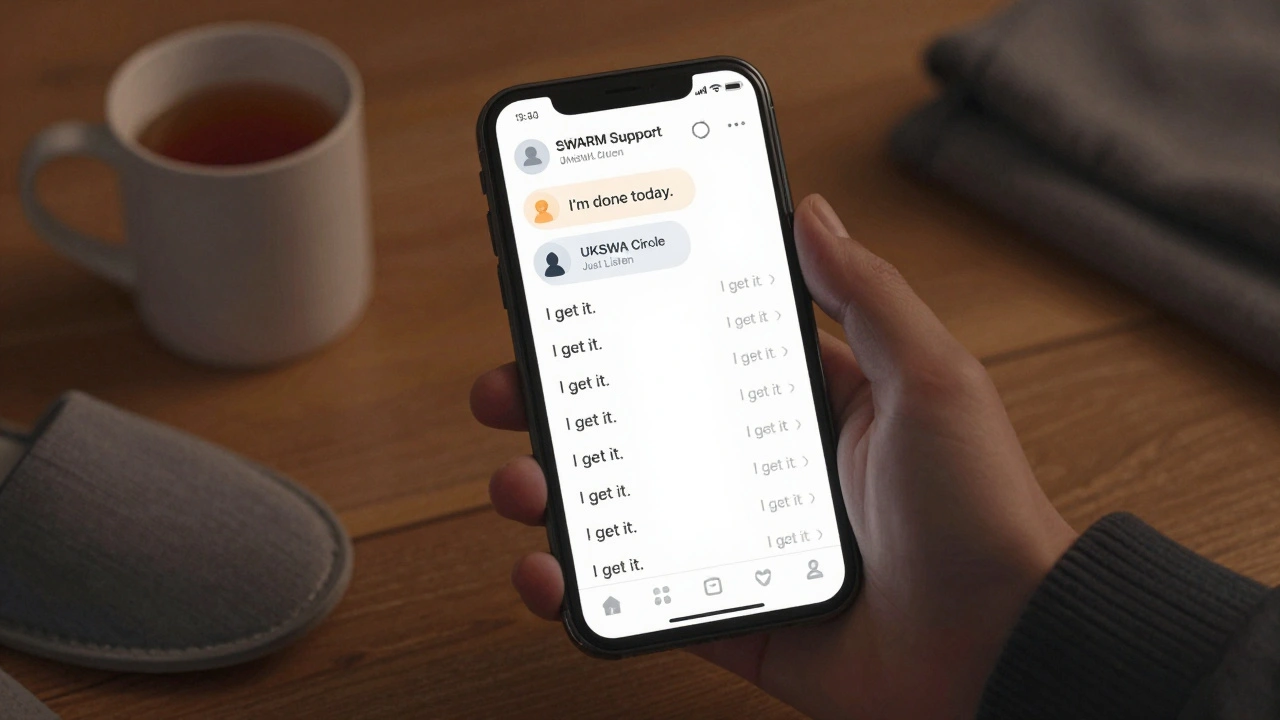
That’s why peer support isn’t optional. It’s oxygen. Groups like SWARM (Sex Workers Advocacy and Resource Movement) and UKSWA (UK Sex Workers Alliance) offer safe, anonymous spaces where escorts talk about burnout, trauma, and survival-not as patients, but as peers.
You don’t need to share your face or your location. Just typing “I’m done today” into a private group and getting 20 replies saying “I get it” can pull you back from the edge.
Rebuilding Your Sense of Safety
Safety isn’t just about screening clients. It’s about feeling safe inside your own skin. When you’ve been treated like an object for too long, your body forgets how to feel like a person.
Try this: Every week, do one thing that has nothing to do with work and brings you physical pleasure. Not sex. Not performance. Just pleasure. A warm bath with Epsom salts. Dancing alone in your kitchen. Hugging a pet. Feeling grass under your bare feet. Let your body remember what it’s like to feel good without being asked to earn it.
These moments rebuild neural pathways. They tell your brain: “You are not a tool. You are not a transaction. You are here to feel.”
When to Seek Professional Help
Therapy isn’t for “broken” people. It’s for people who are trying to stay whole. There are therapists in the UK who specialize in sex work and trauma-no judgment, no shame, no pressure to conform to anyone’s idea of what you “should” be.
Organizations like Stella and Charter House offer sliding-scale counseling specifically for sex workers. Some even offer online sessions with therapists who understand the unique stressors of this work. You don’t need insurance. You don’t need to disclose your job. You just need to say: “I’m not okay.”
And if you’re worried about cost? Many groups offer free peer-led support circles. You don’t need a license to heal. You just need to show up.
You Are Not Your Job
The system wants you to believe your value is tied to your availability, your appearance, your compliance. It wants you to think that if you slow down, you’ll disappear.
You won’t disappear. You’ll breathe.
Every time you choose rest over revenue, you’re not losing money-you’re reclaiming your life. Every time you set a boundary, you’re not being difficult-you’re teaching the world how to treat you. Every time you speak your truth, even quietly, you’re breaking a cycle that was never meant to hold you.
Burnout doesn’t mean you failed. It means you’ve been carrying too much for too long. And now, it’s time to put some of it down.
You don’t have to be strong all the time. You just have to be here. And you are.
Can self-care really prevent burnout for escorts?
Yes-when it’s consistent and tailored to your needs. Self-care doesn’t erase stress, but it builds resilience. Escorts who practice daily body awareness, enforce strict boundaries, and connect with peer support report 40-60% fewer episodes of emotional collapse over six months, according to 2024 field studies by UKSWA. It’s not magic. It’s maintenance.
What if I can’t afford therapy or self-care tools?
You don’t need money to start. Free options exist: peer support groups on encrypted apps like Signal or Telegram, public parks for walking meditation, YouTube videos on grounding techniques, and free PDFs of legal rights from organizations like SWARM. The most powerful tool is simply saying “I need a break” out loud-even if it’s to yourself in the mirror.
Is it okay to take time off even if I rely on this income?
It’s not just okay-it’s necessary. Taking two days off every month reduces the risk of physical injury, emotional breakdowns, and poor decision-making that can cost you more in the long run. Many escorts report earning more over time because they’re sharper, more selective, and less desperate after regular rest. Your body isn’t a machine. It’s your most valuable asset.
How do I know if I’m experiencing burnout or just having a bad week?
A bad week feels temporary. Burnout feels permanent. If you’ve felt numb for more than two weeks, dread work more than you used to enjoy it, or find yourself zoning out during appointments, it’s burnout. If you’ve stopped caring about your appearance, your safety, or your future, it’s time to pause. These aren’t signs of weakness-they’re signals from your nervous system that you’re running on empty.
What should I do if I feel guilty for taking care of myself?
Guilt is a tool used to keep you working. You were taught that your worth is tied to your productivity. But your value doesn’t disappear when you rest. In fact, it grows. Every time you choose yourself, you’re rewriting the story. Write down your guilt. Then write: “I deserve care because I exist, not because I perform.” Repeat until it sticks.
Next Steps: Start Small, Stay Consistent
Don’t try to fix everything at once. Pick one thing from this article-just one-and try it for seven days. Maybe it’s the morning body check-in. Maybe it’s blocking two days next month. Maybe it’s sending one message to a peer group.
Progress isn’t loud. It’s quiet. It’s the day you didn’t cancel because you were too tired. It’s the night you didn’t answer a message and still slept. It’s the moment you looked in the mirror and didn’t flinch.
You’re not broken. You’re not failing. You’re surviving-and that’s enough for now. The rest will come, one breath at a time.