How to Manage Burnout and Stay Resilient in Adult Work Munich

Working in adult work in Munich isn’t just about showing up-it’s about surviving the emotional weight, the long hours, and the isolation that often come with it. Many people assume the job is all about confidence and control, but the reality is far more exhausting. Burnout doesn’t announce itself with a scream. It creeps in quietly: a missed meal, a sleepless night, a numb feeling when you open your phone to messages. By the time you notice, you’re already running on empty.
Why Burnout Hits Harder in Munich’s Adult Work Scene
Munich’s adult work scene is different from other cities. The clients are often high-income professionals, corporate executives, or expats who expect a certain level of polish and discretion. That means more pressure to perform, more emotional labor, and less room to be yourself. You’re not just providing a service-you’re managing expectations, hiding fatigue, and pretending everything’s fine even when it’s not.
A 2024 survey of 127 independent workers in Munich’s adult industry found that 68% reported feeling emotionally drained at least three times a week. Nearly half said they’d skipped meals or sleep to meet client demands. And because so many work alone, there’s no team to notice when someone’s slipping. You’re your own boss, your own HR department, and your own therapist-and that’s a lot to carry.
Recognizing the Signs Before It’s Too Late
Burnout doesn’t start with crying. It starts with small things you ignore:
- You used to look forward to meeting new people. Now you dread the notifications.
- You’ve stopped checking your bank balance because you’re afraid of what you’ll see.
- You’ve stopped talking to friends. Not because you don’t care-but because you’re too tired to explain.
- You feel guilty when you say no to a client-even if you’re exhausted.
- You’ve stopped doing things you used to love: reading, walking, cooking, dancing.
These aren’t just bad days. They’re warning signs. If you’ve noticed two or more of these over the past month, you’re already in the early stages of burnout. The sooner you act, the easier it is to recover.
Build a Real Support System-Not Just Online
Online forums and group chats help, but they’re not enough. You need real, face-to-face connection. In Munich, there are a few discreet support groups for adult workers. One meets every other Thursday at a quiet café near Marienplatz. No names are taken. No photos are allowed. Just coffee, quiet, and people who get it.
Don’t wait for someone to reach out to you. Reach out first. Even if it’s just a text: “I’m having a rough week. Can we talk?” That’s how real support starts. You don’t need to share everything. Just enough to feel less alone.
Set Boundaries That Actually Stick
Burnout thrives when boundaries are fuzzy. You say yes to extra hours because you think you have to. You accept last-minute bookings because you’re scared of losing income. But every time you say yes when you mean no, you chip away at your resilience.
Here’s what works for people who’ve turned things around:
- Block out two full days a week with zero bookings. No exceptions. Use them to rest, recharge, or do nothing.
- Set a hard cutoff time. No clients after 10 PM. Period.
- Use a pre-screening form. Ask clients to answer three questions before booking: Why are you booking? What are you looking for? Have you worked with someone like me before?
- Keep a “no” list. Write down three types of requests you will never accept. Keep it visible. When you feel pressured, read it.
Boundaries aren’t selfish. They’re survival.
Reclaim Your Body-Not Just Your Time
Your body is your tool. But if you treat it like a machine, it will break. You can’t outwork exhaustion. You can’t out-sleep burnout. Recovery starts with physical care.
Start small:
- Drink water before every client session. Dehydration makes fatigue worse.
- Take a 10-minute walk after work-even if it’s just around your apartment. Move your body without purpose. Let your mind wander.
- Try a 5-minute breathing exercise before bed: inhale for 4 counts, hold for 4, exhale for 6. Repeat five times.
- Get a massage once a month. Not for pleasure-for recovery. Your muscles hold stress. Let someone else release it.
These aren’t luxuries. They’re non-negotiable maintenance.
Track Your Energy, Not Just Your Income
Most people track their earnings. Few track their energy. But energy is your real currency.
Try this simple system for two weeks:
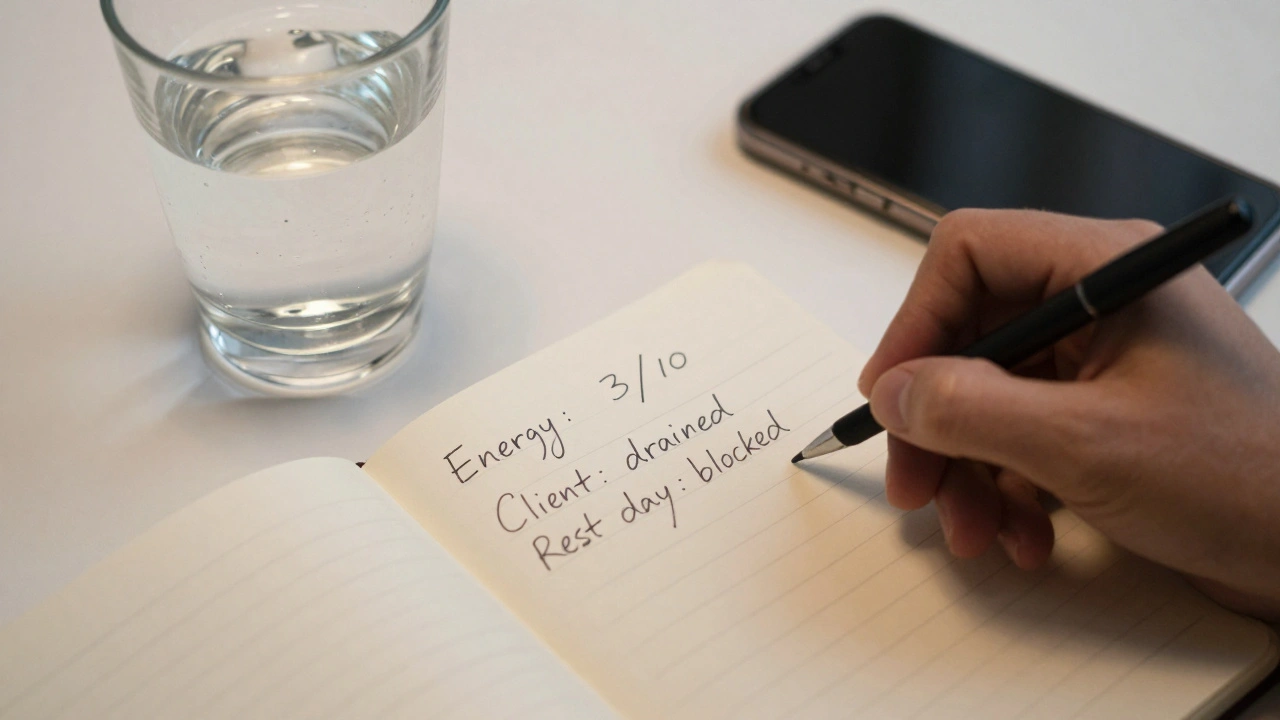
- Each morning, rate your energy from 1 to 10. Write it down.
- After each client, rate how you felt during and after: drained (1), neutral (5), energized (10).
- At the end of the week, look for patterns. Which clients leave you feeling empty? Which ones give you a spark?
- Adjust your bookings based on energy-not just payment.
You might find that a lower-paying client leaves you feeling more alive than a high-paying one. That’s not irrational. It’s insight.

Plan for the Long Game
Resilience isn’t about pushing through. It’s about building a life that doesn’t require you to push through every day.
Ask yourself:
- What would your ideal week look like if money wasn’t the main factor?
- What’s one small thing you could add to your routine that makes you feel like yourself again?
- What’s one thing you’ve put off because you thought you “couldn’t afford” to take time for it?
Maybe it’s taking a weekend trip to the Alps. Maybe it’s signing up for a pottery class. Maybe it’s just letting yourself sleep in on Saturday. Whatever it is-start there.
Resilience isn’t about being strong all the time. It’s about knowing when to rest, when to ask for help, and when to say no-even when it scares you.
It’s Not Weakness to Need Help
There’s a myth in adult work that the strongest people are the ones who never crack. That’s a lie. The strongest people are the ones who know when they’re broken-and reach out anyway.
If you’re feeling overwhelmed, you’re not failing. You’re human.
In Munich, there are free, confidential counseling services for sex workers. They don’t ask for ID. They don’t judge. They just listen. You can find them through the Munich-based NGO ProMunich. They also offer legal advice, safety planning, and help with transitioning out of the industry if that’s your goal.
You don’t have to do this alone. And you don’t have to wait until you’re at rock bottom to ask for help.
What Comes Next?
Burnout doesn’t vanish overnight. But you don’t need to fix everything at once. Pick one thing from this list-just one-and do it this week.
Maybe it’s blocking two days off. Maybe it’s texting a friend. Maybe it’s drinking water before your next session.
Small steps add up. And every time you choose yourself-even in a tiny way-you’re rebuilding your resilience.
You’re not just surviving. You’re learning how to live again.
How do I know if I’m burned out or just having a bad week?
A bad week feels temporary-you still want to work, even if you’re tired. Burnout feels permanent. You’ve lost interest in things you used to enjoy, you feel numb, and you’re constantly drained even after rest. If this lasts more than two weeks, it’s burnout-not stress.
Can I still work if I’m dealing with burnout?
Yes-but you need to change how you work. Reduce your hours. Say no to high-pressure clients. Take rest days. Burnout doesn’t mean you have to quit. It means you need to work smarter, not harder. Pushing through will only make it worse.
Is it safe to join a support group in Munich?
Yes. Groups like the one at the café near Marienplatz are anonymous and confidential. No names are recorded. No personal details are shared. They’re designed to be safe spaces for people who need to talk without fear of judgment or exposure.
What if I can’t afford therapy or counseling?
ProMunich offers free counseling specifically for adult workers. No payment is required. You don’t need insurance. You don’t need to prove your income. Just show up. Many people get help for the first time through these services and say it changed their lives.
How do I set boundaries without losing clients?
Clients who respect you will respect your boundaries. Those who don’t? You don’t need them. You’ll attract better clients when you stop overworking. People notice when you’re calm, present, and confident. That’s more valuable than being available 24/7.
Can I transition out of adult work if I want to?
Yes. ProMunich and other organizations offer career coaching, resume help, and connections to training programs-even if you’ve never had another job. Many people successfully move into retail, admin work, counseling, or even start their own businesses. You’re not stuck.