How to Report Abuse or Coercion Related to Adult Work in Dubai
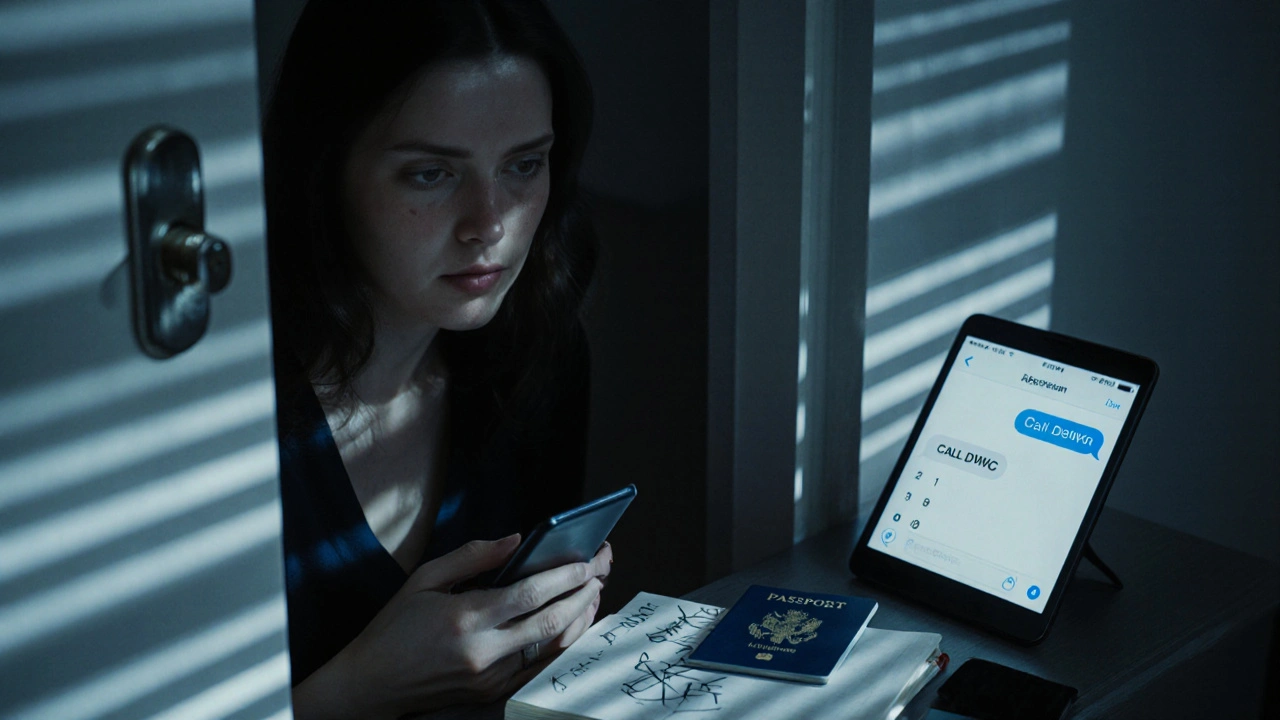
If you’re working in the adult industry in Dubai and feel unsafe, pressured, or trapped, you’re not alone-and help is available. The law in Dubai does not recognize legal adult work, which makes reporting abuse even harder. But silence isn’t safety. Knowing how to reach out, who to contact, and what protections exist can make the difference between staying in danger and getting out.
Understand Your Legal Reality in Dubai
Dubai has strict laws against prostitution and any form of commercial sex work. Even if you’re working independently through platforms like AdultWork, the activity itself is illegal under UAE federal law. This means you don’t have legal protections as a worker. You can’t file a labor complaint. You can’t demand payment through official channels. And if you report abuse, you risk being treated as a criminal instead of a victim.
That doesn’t mean you have no rights. The UAE Criminal Code protects all people from violence, threats, forced confinement, and sexual coercion-no matter their occupation. Article 347 of the UAE Penal Code criminalizes coercion, and Article 349 covers sexual assault. These laws apply to everyone, including those in the adult industry.
Recognize the Signs of Abuse and Coercion
Abuse doesn’t always look like physical violence. It can be subtle, controlling, and emotionally crushing. Here’s what to watch for:
- Someone controls your phone, money, or travel documents
- You’re forced to see clients you don’t want to
- Threats to expose your identity, family, or religion
- Being told you owe money for rent, transport, or "protection"
- Being locked in an apartment or denied medical care
- Being pressured into services you didn’t agree to
If any of these sound familiar, you’re not overreacting. This is exploitation. And it’s not your fault.
Who Can You Trust to Help?
Police in Dubai are not always the first choice for people in the adult industry-but they’re not your only option. Here are the safest paths to get help:
- The Dubai Police Emergency Line (999) - Call if you’re in immediate danger. Tell them you’re reporting a crime: assault, kidnapping, or forced labor. Do not mention "adult work." Say you’re a victim of coercion or human trafficking. They are trained to respond to trafficking cases under UAE’s Anti-Human Trafficking Law.
- The Dubai Foundation for Women and Children (DFWC) - This government-run organization offers confidential shelter, legal aid, and counseling. They work with victims of gender-based violence, including those exploited in informal work sectors. You can call them at 800 392 or visit their center in Al Barsha. Staff are trained to handle sensitive cases without judgment.
- International Organization for Migration (IOM) Dubai - IOM helps victims of human trafficking, regardless of nationality. They can connect you with safe housing, medical care, and repatriation support if you want to return home. Contact them through their website or via WhatsApp at +971 50 160 2505.
- Embassy Support - If you’re a foreign national, your country’s embassy in the UAE can help. Many embassies have dedicated consular officers for citizens in distress. Bring your passport and any evidence (texts, photos, recordings) if you have them. Even if you don’t, they can still assist with safety planning.
How to Report Without Getting Arrested
Reporting abuse in Dubai requires strategy. You need to frame your situation as a crime-not a violation of immigration or morality laws.
Use these phrases when speaking to officials:
- "I am being held against my will."
- "I was forced to perform acts I did not agree to."
- "I was threatened with violence if I left."
- "I need protection from someone who is exploiting me."
Avoid saying:
- "I work as an escort."
- "I was advertising on AdultWork."
- "I agreed to this at first."
These phrases shift focus from victimhood to criminal behavior. Authorities are required to investigate threats and coercion-even if the victim was involved in illegal activity.
What Happens After You Report?
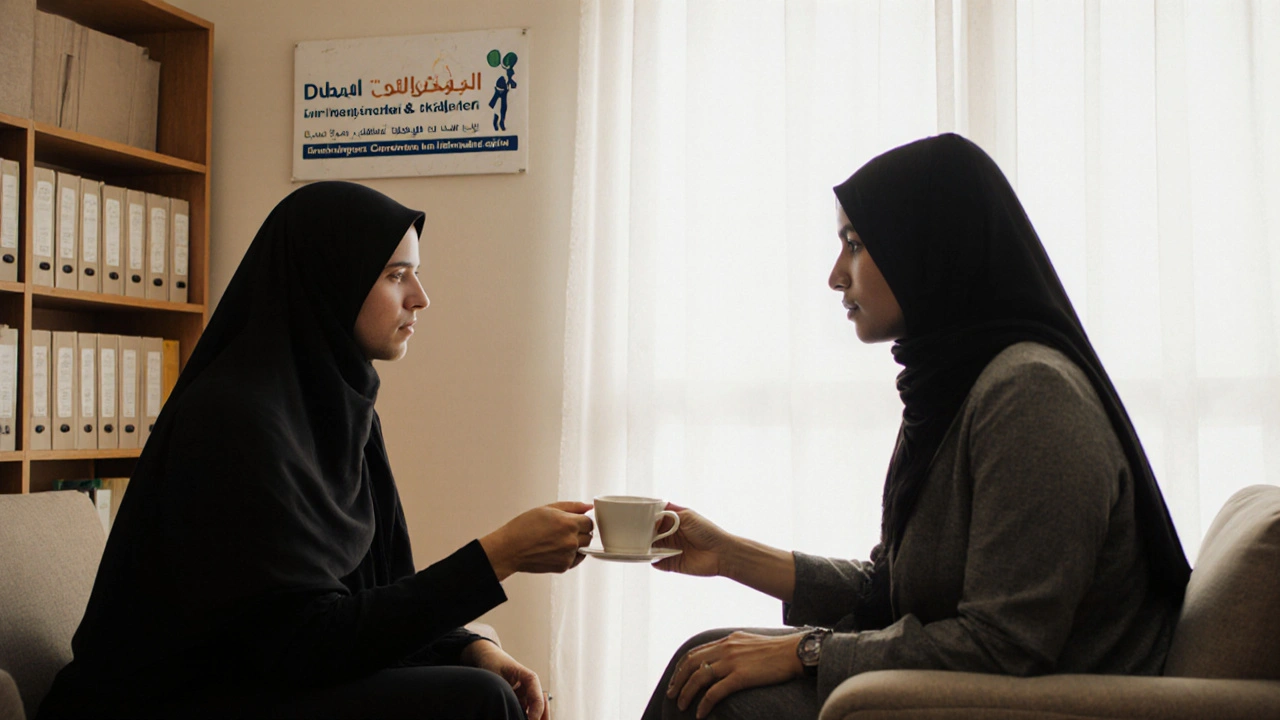
If you report to DFWC or IOM, you’ll likely be offered a safe house. Your identity will be kept confidential. You won’t be asked to name your employer unless you choose to. Medical care, food, and counseling are provided free of charge.
If you go to police, they may ask for a statement. You have the right to ask for a female officer to take your statement. You also have the right to legal representation. If you don’t have a lawyer, ask for one-many NGOs provide free legal aid in these cases.
Some people worry about deportation. If you’re undocumented, you may be placed in temporary detention while your case is reviewed. But under UAE’s human trafficking protocol, victims are not automatically deported. You can apply for temporary residency while cooperating with authorities.
What You Should Do Right Now
If you’re in immediate danger:
- Call 999. Say: "I am being held by force and need help."
- Text a trusted friend or contact: "I need you to call the police. My location is [brief description]."
- If you can’t speak, dial 999 and stay on the line. The system can trace your location.
If you’re not in immediate danger but feel trapped:
- Write down names, dates, phone numbers, and what happened. Even notes on your phone count.
- Save screenshots of messages, payments, or threats.
- Reach out to DFWC or IOM. They won’t ask questions you’re not ready to answer.
- Change your passwords. Lock down your social media. Don’t post anything that could be used against you.
What Doesn’t Work
Don’t try to handle this alone. Don’t rely on other workers to protect you. Don’t trust someone who says they can "fix" your situation for a fee. Don’t wait for things to get better. Abuse doesn’t end on its own.
Don’t assume no one cares. Organizations in Dubai work every day to help people in your situation. You’re not invisible. You’re not beyond help.
Real Stories, Real Outcomes
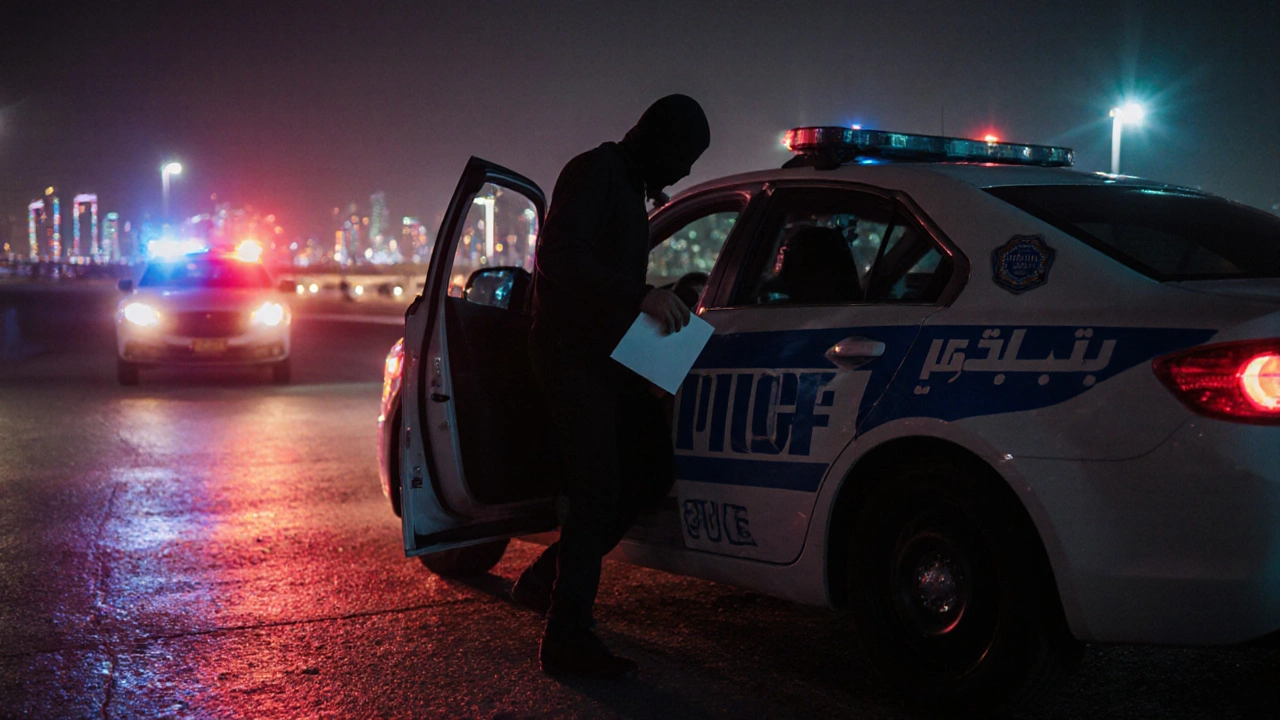
In 2024, a woman from the Philippines escaped a forced situation in Dubai after contacting IOM. She had been locked in a studio for three months, forced to work 12-hour days. She sent a single text to a friend abroad, who reached out to the IOM. Within 48 hours, she was moved to a safe house. Three weeks later, she was on a flight home with a travel visa and counseling support.
An Indian national in Dubai reported coercion after her employer stole her passport and demanded 80% of her earnings. She called DFWC anonymously. They arranged for her to stay in a shelter while police investigated. Her case led to the arrest of two individuals running an exploitation ring.
These aren’t rare cases. They happen more often than anyone admits.
What Comes After Safety
Getting out is the first step. Healing is the next. Many women who leave exploitation face depression, anxiety, or shame. That’s normal. Support groups exist-some online, some in person. DFWC offers weekly counseling. IOM connects people with therapists who understand trauma from forced work.
If you want to return home, embassies can help with documents, flights, and reintegration programs. If you want to stay in the UAE legally, some cases allow for residency permits under human trafficking protections.
You don’t have to go back to the same life. You don’t have to hide forever. Your future doesn’t have to be defined by what happened to you.
Can I report abuse in Dubai if I’m not a citizen?
Yes. UAE law protects all people on its soil, regardless of nationality or immigration status. Organizations like IOM and DFWC assist foreign nationals every day. Your status doesn’t disqualify you from help.
Will the police arrest me if I report abuse?
It’s possible, but not guaranteed. Police are required to prioritize crimes like coercion, assault, and trafficking. If you frame your situation as being forced or threatened, they’re more likely to treat you as a victim. Avoid mentioning adult work directly. Focus on the abuse, not the activity.
What if I’m scared to call the police?
You don’t have to call them first. Contact the Dubai Foundation for Women and Children (DFWC) at 800 392. They’ll guide you safely through the next steps. You can also reach out to IOM via WhatsApp at +971 50 160 2505. They offer anonymous support and can arrange safe transportation to a shelter.
How do I collect evidence if I’m being monitored?
Use public devices like library computers or hotel phones. Write down details in a notebook you keep hidden. Save messages on a device you can take with you. If you have access to a friend’s phone, send texts to them describing what’s happening. Even vague notes like "He took my passport on June 3" can be crucial later.
Can I get help if I’m still working?
Yes. Many people get help while still in the situation. DFWC and IOM can create safety plans that don’t require you to quit immediately. They can help you leave on your own terms, with support and a place to go. You don’t have to be free to get help-you just have to want to be.
Final Thought
You didn’t choose to be trapped. You didn’t choose to be controlled. And you don’t have to stay that way. Help exists. It’s quiet, it’s not flashy, but it’s real. The first step isn’t bravery-it’s reaching out. One call. One message. One moment of trust. That’s all it takes to start changing your story.